 Comparison
Alternatives to Traditional Schooling for Australian Families
Last Updated: November 14, 2026
Quick Summary
Alternatives to traditional schooling for australian families include independent alternative schools such as Montessori and Steiner, home education, distance education and blended online programs. Each pathway has different enrolment rules, costs and daily rhythms, and home education is legal in every state and territory but regulated separately by each jurisdiction.
- Alternative schools usually run smaller classes and let students work at their own pace.
- Home education is legal in every state and territory but registration requirements are not uniform.
- Distance education provides a teacher and school reports, while self-paced platforms are parent-supervised.
- Total annual cost should include parent time and foregone income, the most often omitted cost.
- Ask providers what happens when your child gets stuck and how progress is shown to a regulator.
Table of Contents
- What Alternative Schooling Means for Australian Families
- Alternative Schools Versus Mainstream Education
- Types of Alternative Schooling: Montessori, Steiner and Beyond
- Homeschooling NSW Requirements and Registration Rules
- Distance Education and Online Schooling Compared
- Online Schooling Platforms for Self-Paced Learning
- Costs, Support and Outcomes: Choosing What Fits Your Family
- Start Your Child's Alternative Learning Plan with IQ Learning
- Frequently Asked Questions
What Alternative Schooling Means for Australian Families
Alternative schooling is any recognised education pathway outside a conventional neighbourhood school, including independent alternative schools, home education, distance education and blended online programs, and it covers the main alternatives to traditional schooling for australian families.
Options range from full-time enrolment at an independent school with a distinct philosophy to learning entirely at home under a registered home education program, each with different enrolment rules, costs and daily rhythm.
Below, we break down each pathway, what registration involves, what it costs, and how to judge whether it suits your child.
Alternative Schools Versus Mainstream Education
The clearest difference is class size and pace.
That structure suits some children and frustrates others.
Mainstream schooling has real advantages: it is free in the government system, local, and offers a wide peer group and extracurriculars. Alternative settings often cost money and sit further from home.
Here is the honest trade-off, in table form:
| Priority | Mainstream School | Alternative Pathway |
|---|---|---|
| Cost to family | Low in government system | Varies widely, often paid |
| Class size | Larger | Usually smaller |
| Curriculum pace | Fixed calendar | Flexible, self-paced |
| Social group | Broad, local | Smaller, sometimes narrower |
| Parent time required | Minimal | Often substantial |
| Registration burden | Handled by school | Falls on the parent |
A common mistake is choosing an alternative pathway for philosophical reasons, then discovering the parent supervision load is far heavier than expected. Be clear about which column matters most before you commit.
Types of Alternative Schooling: Montessori, Steiner and Beyond
Australian families can choose between several established approaches, each with a different view of how children learn. The main ones are Montessori, Steiner, flexible and student-centred schools, home education, and distance or online schooling.
Montessori and Steiner Education
Montessori education is built around self-directed activity and hands-on materials, with mixed-age classrooms and teachers acting as guides rather than lecturers. Children choose much of their own work within a prepared environment.
Steiner education, also called Waldorf, takes a different route. It emphasises rhythm, creativity and delayed formal academics, with a strong arts component and often a single teacher staying with a class across several years.
Both are delivered through independent schools that set their own fees and enrolment processes. Neither is a casual drop-in option: you apply, interview, and often join a waitlist.
Flexible and Student-Centred Learning
Flexible learning covers schools and programs that adjust timetables, delivery mode or curriculum to the individual student. Student-centred learning puts the child's interests and pace at the centre of planning, rather than a fixed syllabus sequence.
These settings often suit disengaged students, young people returning to study, or students combining school with sport, performance or work. Some run on campus, others blend on-site and remote delivery.
Homeschooling NSW Requirements and Registration Rules
Home education is legal in every state and territory, but each jurisdiction regulates it separately, and registration requirements are not uniform. That is the biggest source of confusion for families who move, travel for work, or read advice written for another state. The section below uses New South Wales as the worked example, then explains how other jurisdictions differ.
How the New South Wales process works
In New South Wales, home education is regulated by the state's education standards regulator. Check the current registration requirements with that regulator before applying.
How other states and territories differ
Each jurisdiction has its own regulator, application process and expectations about learning plans and reporting. Some run registration through their education department, others through a dedicated authority, and renewal frequency and documentation requirements differ.
Rather than assume another state's rules apply, check the current requirements with the regulator in the state or territory where the child resides. The key variables to confirm are:
- Who the registering authority is.
- Whether a learning plan is required at application, and what it must contain.
- Which key learning areas or curriculum framework the plan must address.
- How often registration is renewed and what evidence is requested at renewal.
- Whether there are any attendance, reporting or record-keeping obligations beyond registration.
If you are at the start of this process, our guide on how to start homeschooling in Australia walks through state-by-state registration and learning plan steps.
What registration does and does not require
That flexibility is why the learning plan matters: it translates your chosen approach into something a regulator can assess, and it is the record you return to at renewal.
Distance Education and Online Schooling Compared
Distance education is schooling delivered remotely, usually through a registered school of distance education, with a teacher responsible for the program.
The distinction matters for enrolment.
| Feature | Distance Education | Online Self-Paced Platform |
|---|---|---|
| Enrolment | With a distance education school | With the platform, or via your home ed registration |
| Teacher provided | Yes | No, parent supervises |
| Pace | School calendar | Student's own pace |
| Reporting | School reports | Parent tracks progress |
| Best for | Families wanting school oversight remotely | Families already registered for home education |
If you are weighing self-paced options, our comparison of the best online homeschooling platforms in Australia covers pricing and state registration rules side by side.
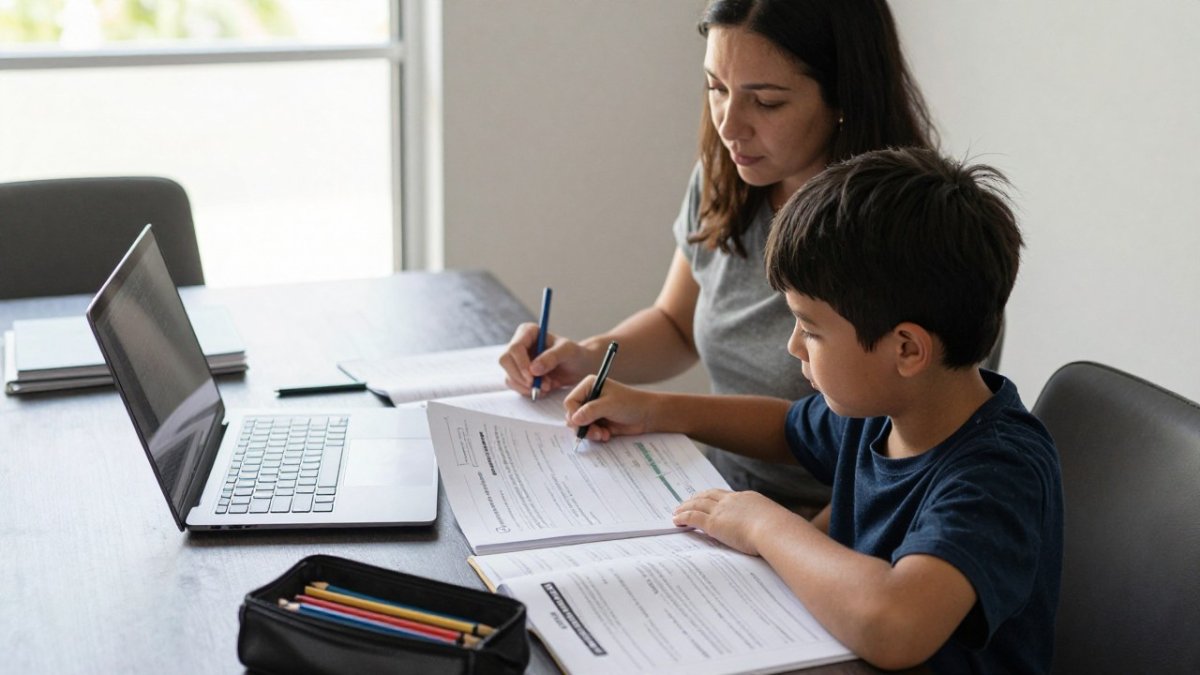
Online Schooling Platforms for Self-Paced Learning
Self-paced online platforms give home-educating families a structured spine: lessons, activities, and a record of what has been covered.
At IQ Learning, we built our platform for exactly this gap.
The platform offers separate access paths for parents and children. Sign-in works through Google, Microsoft or email accounts.
Established Australian curriculum providers also serve this market.
What most guides miss is that a platform does not replace the parent's role in home education. It reduces the planning and record-keeping load. You still supervise, encourage and make the judgement calls.
Costs, Support and Outcomes: Choosing What Fits Your Family
Most comparisons stop at the sticker price of a curriculum or a school's fee schedule. The real comparison is total annual cost to the family, the support available when something goes wrong, and the evidence that the option is working for your child.
Total cost: the categories that actually add up
A realistic annual budget usually includes several categories, and the mix depends on whether you are enrolling in a school, registering for home education, or using a self-paced platform alongside home education.
- Tuition or enrolment fees. Independent alternative schools set their own fees, which vary widely between schools and often rise with the year level. Government distance education may involve different arrangements depending on eligibility.
- Curriculum and materials. Workbooks, textbooks, digital subscriptions, science and art supplies, and printing. A structured curriculum package can run to several hundred dollars a year; self-paced platforms are usually subscription-based.
- Registration and compliance costs. Usually modest in direct fees, but they carry a time cost in drafting learning plans and maintaining records.
- Transport. Relevant where an alternative school is further from home than the local school, or where the child attends blended on-site sessions.
- Tutoring and specialist support. Common where a child has a specific learning need or is working well ahead or behind in a subject.
- Excursions, incursions and community activities. Home-educating families often budget for these deliberately to maintain social contact.
- Parent time and foregone income. The largest and most frequently omitted cost. Home education and flexible programs typically require a parent to supervise, plan and record, which can mean reduced paid work.
For a full breakdown of subscription fees, payment plans and total annual costs, see our guide to the subscription cost for online schooling.
Where financial assistance exists, it is usually tied to a specific enrolment type or eligibility criterion rather than available across all pathways. Check what applies to your situation with the school, registering authority or platform before you build a budget around it.
Support: the questions that separate providers
Support is where providers differ most, and where marketing language is least useful. Ask three concrete questions of any provider:
- What happens when my child gets stuck? Is there a teacher, tutor or support channel, what are the response times, and does it operate outside business hours?
- How do I demonstrate progress to the regulator? Does the provider produce records in a form a registering authority would accept, or does the parent assemble them from scratch?
- What does the provider do when my child learns differently? Can the program adapt pace and content, and what adjustments are available for a child with a learning support need?
Outcomes: what can and cannot be claimed
Be sceptical of anyone promising results. Assess whether an option gives you clear visibility of progress, adapts when a child is bored or struggling, and produces records you can show a reviewer.
A practical way to judge outcomes is to set your own baseline at the start of the year: where the child is in literacy and numeracy, what engagement looks like, and what you want to demonstrate twelve months later.
- Does the program show progress in a form a regulator would accept?
- Can it adapt when my child races ahead or falls behind?
- What support exists when my child is stuck at 9pm?
- Is the total annual cost clear, including any add-ons?
- Can I trial it before committing to a year?
For a direct comparison of costs, registration and socialisation across pathways, our homeschooling vs traditional school guide sets the two side by side.
Start Your Child's Alternative Learning Plan with IQ Learning
Choosing an alternative pathway is the easy part. Making it work week to week is where families need support.
At IQ Learning, we built the platform so you can stop managing spreadsheets and start enjoying the learning journey with your child. The platform offers personalised learning plans, AI-powered educational content, interactive quizzes and progress analytics.
If you are ready to put structure behind your child's learning, you can take up the free trial with IQ Learning to see how it works for your family.
The hardest part of alternative schooling is not the decision, it is sustaining it through term three when motivation dips and records need updating. IQ Learning gives you personalised learning plans, AI-powered lessons and quizzes, and progress analytics that keep the year on track. Get started with IQ Learning and give your child a learning plan built around their pace, not a calendar.
Frequently Asked Questions
What are the alternatives to traditional schooling?
Families can choose from home education, distance education, alternative schools such as Montessori and Steiner, flexible learning programs, and online schooling platforms. Each option differs in how it is registered, what it costs, and how much parent involvement it requires. Comparing attendance rules, curriculum requirements and social opportunities before deciding helps families avoid a poor fit.
Is homeschooling a good alternative to mainstream school?
Homeschooling suits families who want control over pace, content and learning environment, and it works well for children who are disengaged or need individualised learning. It also requires significant parent time, planning and record-keeping. Registration rules vary by state, so check requirements before withdrawing a child from school.
What is the difference between homeschooling and distance education?
Homeschooling is parent-led education delivered at home under state registration rules. Distance education is typically delivered by a school or provider with a teacher overseeing the program, often for students in rural areas or with specific needs. Online schooling can sit within either model, depending on who sets the curriculum and monitors progress.
How do families choose the right education option for their child?
Start with the child's learning style, social needs and any support requirements, then compare registration obligations, total costs and how much teaching the family can realistically provide. Visit or trial options where possible, such as a free trial of an online platform, and plan a review point after one term to decide whether the choice is working.